Why Rest Feels So Uncomfortable
Have you ever noticed that when you finally have a free day, a quiet evening, or a few hours to yourself, you end up feeling anxious instead of relaxed?
Maybe you've spent weeks looking forward to a break, only to find yourself feeling restless, irritable, distracted, or oddly guilty once it finally arrives.
If so, you're not alone.
It can feel incredibly frustrating to carve out time for rest only to discover that it doesn't feel restorative at all. Instead of feeling refreshed, you feel on edge. Instead of slowing down, your mind starts racing.
So why does this happen?
I've noticed this in myself many times over the past few years. Even when nothing urgent was happening, I couldn't shake the feeling that I was forgetting something, falling behind on some invisible task, or failing to meet an expectation I couldn't quite identify.
And whenever I finally sat down in silence, I often felt restless rather than relaxed.
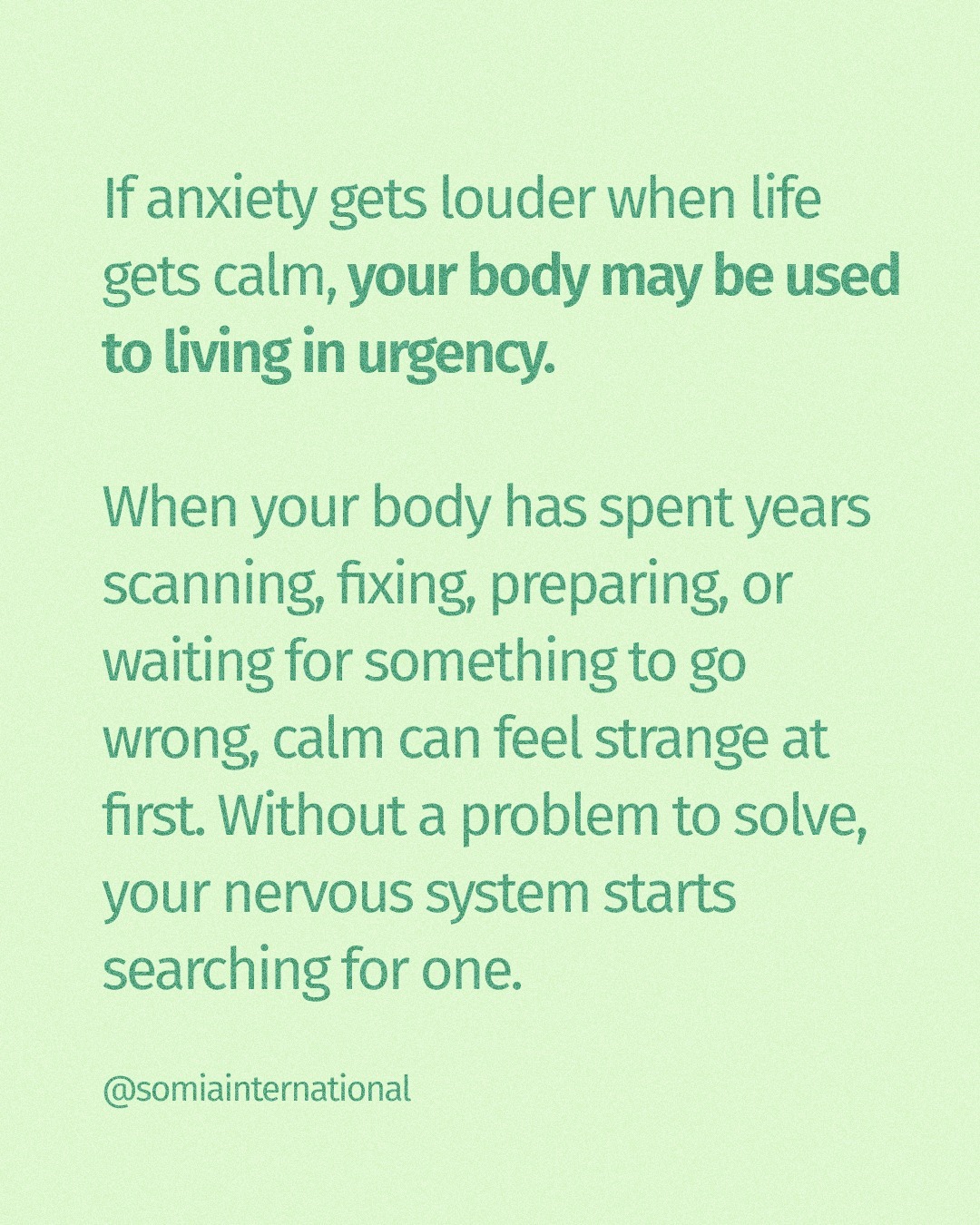
Eventually, I realized something important: my nervous system had become accustomed to being busy. It was used to the feeling of juggling a million things at once, with few days off or any time for self-care.
For a long time, life required me to juggle a million things at once. Responsibilities, commitments, deadlines, relationships, work, family, and the endless mental checklist that so many of us carry every day. Over time, my body began treating that level of stress and activity as normal.
And that's where many people find themselves.
The reason rest can feel uncomfortable is that our nervous system doesn't always recognize stillness as safe.
When we spend long periods operating in a state of stress, pressure, urgency, or overwhelm, our bodies can become stuck in what is commonly known as "fight-or-flight" mode. This is the body's built-in survival response, designed to help us respond to perceived threats.
The problem is that the nervous system doesn't always distinguish between a true emergency and the chronic stress of everyday life.
Emails.
Deadlines.
Financial pressure.
Parenting responsibilities.
Relationship challenges.
Constant notifications.
An overloaded schedule.
Over time, our bodies can begin responding to all of it as if we need to stay alert and ready at all times. So when we finally try to slow down, the nervous system doesn't automatically switch into relaxation mode. Instead, the body may continue sending signals that it's time to stay productive, stay vigilant, or stay prepared.
In addition to rest feeling uncomfortable, this is also why many people find themselves reaching for their phone, starting another project, cleaning the house, checking email, or finding something (anything) to do when they finally have a moment to breathe.
Stillness can feel unfamiliar, and when something feels unfamiliar, the nervous system often interprets it as unsafe.
The good news is that this doesn't mean you're bad at resting, or that you're doing self-care “wrong”. More often, it means your body has learned how to survive in a state of constant activity and now needs time, patience, and practice to learn something different.
Real rest is a skill. And like any skill, it often takes time to develop.
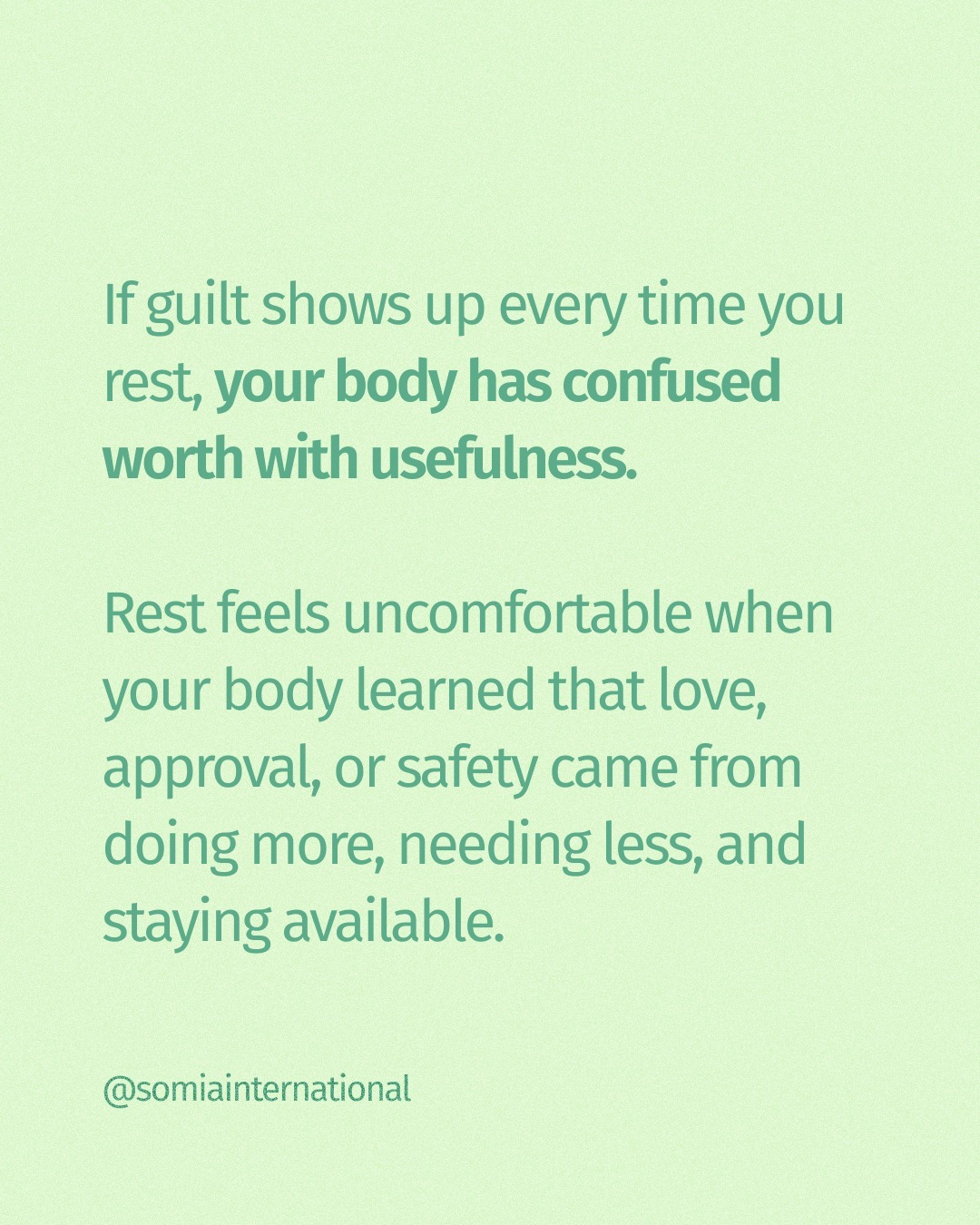
A few ways to help your nervous system transition into a "rest and digest" mode (the mode where the body can relax, recover, digest food efficiently, restore energy, and focus on long-term health) after spending so much time in fight-or-flight are by introducing small moments of self-care, mindfulness, and boundaries into your everyday life.
For example, instead of rushing from one thing to the next, challenge yourself to intentionally do some things more slowly. When we are living in a state of constant stress, our bodies often move from task to task on autopilot. In order to help our bodies recognize that they are safe enough to rest, we have to become more aware of how quickly we're moving through our days and how often our minds are racing ahead to the next thing.
Some of the most effective changes are often the simplest!
Maybe that means taking a full lunch break each day instead of working through it. It could mean setting a specific time each evening when you stop checking work emails or responding to texts. For some people, removing their email app from their phone altogether can be a helpful way to create separation between work time and personal time.
Having boundaries with ourselves not only helps us, but also the people around us. It allows us to be more present, more engaged, and to have more energy because we have taken time to care for ourselves.
Resetting your nervous system and establishing boundaries that allow for rest and recovery takes time and effort. You have to find what works for you, identify the boundaries you need, and be willing to maintain or adjust them as life changes.
If someone asks why you didn't respond to an email they sent at 8 p.m., instead of immediately apologizing, you might simply say, "My work hours are 8 a.m. to 5 p.m. I respond to emails during those hours."
If that feels inconvenient to someone else, that does not automatically mean you've done something wrong.
Boundaries are not selfish. They are one way we communicate to ourselves and others that our wellbeing matters. And when we consistently care for ourselves, we are often better equipped to show up for the people, responsibilities, and roles that matter most.
If rest feels uncomfortable right now, be patient with yourself. A nervous system that has spent months or years operating in survival mode will not learn to slow down overnight.
And if you're finding it difficult to do that work on your own, we’re here for you. At Anchored Mind, we help people better understand their stress, their nervous systems, and the patterns that may be keeping them stuck. We'd be honored to support you on that journey.